

Categories
10 May, 2026
Savvy News
In 2025, JPMorgan Chase deployed more than 400 AI use cases across its operations and now employs more AI engineers than most Silicon Valley startups. Bank of America's virtual assistant Erica surpassed 2 billion client interactions. Visa's AI fraud detection models analyze 500 data points in 100 milliseconds for each transaction. The transformation of credit card and banking operations by artificial intelligence is not approaching. It is already well underway, reshaping what the industry can do and who it does it for.
400+
AI use cases deployed at JPMorgan Chase
2B+
Bank of America Erica interactions to date
$40B
in fraud losses prevented by Visa AI in 2023
45M
Americans considered credit invisible by major bureaus
400+
AI use cases deployed at JPMorgan Chase
2B+
Bank of America Erica interactions to date
$40B
in fraud losses prevented by Visa AI in 2023
45M
Americans considered credit invisible by major bureaus
Fraud detection: where AI has already delivered
Real-time fraud detection is the clearest AI success story in consumer credit. Traditional rules-based systems flagged transactions based on fixed thresholds: a purchase over $500 in a new city triggered a decline or a call. These systems blocked legitimate transactions constantly and missed sophisticated fraud patterns that did not fit the preset rules.
Machine learning models trained on billions of transactions now evaluate each charge against hundreds of behavioral signals simultaneously: your typical spending geography, usual transaction times, device fingerprint, merchant category consistency with your history, and whether the amount pattern matches known fraud vectors. Visa reports that its AI models reduced fraud losses by $40 billion in 2023. The false positive rate, legitimate transactions declined by mistake, has dropped significantly. For consumers, the result is fewer declined purchases and more secure accounts without more friction.
Credit underwriting is being rewritten
Traditional credit underwriting relies on FICO scores, income verification, and debt-to-income ratios. These signals work for people with long credit histories but systematically exclude younger Americans, recent immigrants, and the 45 million Americans considered credit invisible by the major bureaus.
AI-powered underwriting models incorporate alternative data: rental payment history, utility payments, bank transaction patterns, and employment data from payroll processors. Companies like Upstart and Petal have built lending products that approve borrowers rejected by traditional models at competitive rates, with lower default rates than initially predicted by the incumbents. Capital One, American Express, and Discover have all expanded their use of alternative data signals in credit decisions over the past two years.
Personalized offers and the optimization engine
AI has transformed how issuers market to existing cardholders. Instead of monthly statement inserts promoting fixed products, issuers now run real-time propensity models that identify the moment a cardholder is most likely to value a particular offer. A cardholder who just booked a flight gets a travel insurance upsell. One who paid off a balance gets a balance transfer offer. One whose spending has shifted to home improvement receives a home equity line pitch.
This is sometimes genuinely useful for cardholders and always efficient for issuers. It also means banks are investing heavily in modeling your financial behavior in detail. The personalization engine that serves you a relevant credit limit increase offer is the same engine that identifies when you are financially stressed and most likely to carry a high-interest balance.
Customer service: the chatbot maturity curve
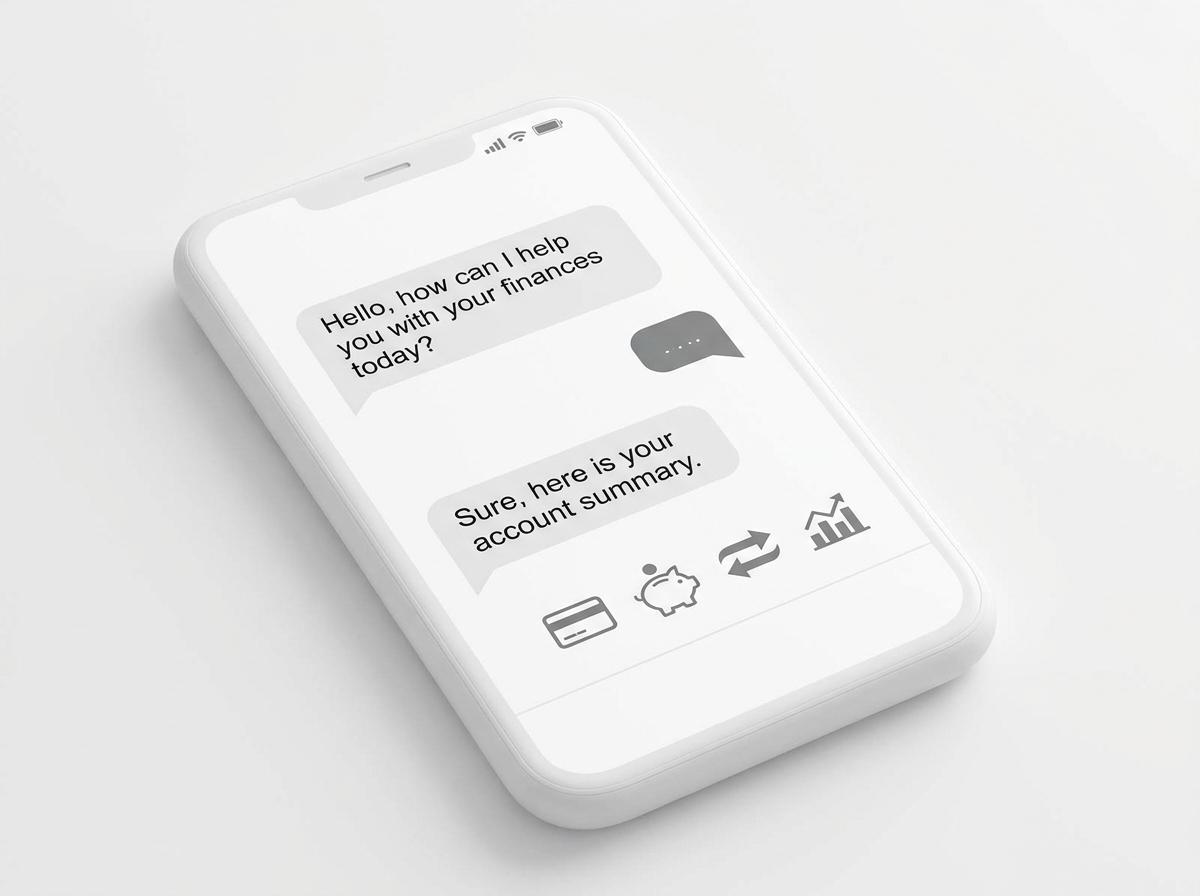
Early bank chatbots were widely mocked for routing customers in circles. The AI driving these systems has improved substantially. Bank of America's Erica, USAA's virtual assistant, and similar systems now handle balance inquiries, fraud disputes, spending analysis, and payment scheduling without human intervention. Resolution rates for common requests now exceed 85% on first contact for the leading implementations.
The gap remains in complex situations. A dispute involving a merchant where the evidence is ambiguous, a hardship request requiring judgment, or a complaint about a fee applied incorrectly still requires a human agent with authority. The best AI deployments recognize this and hand off cleanly. Regulatory pressure from the CFPB on customer service quality is pushing the industry toward better escalation design.
What this means for cardholders in 2026
For consumers, the practical implications of AI in banking run in two directions. On the positive side: faster fraud resolution, more accurate credit decisions that expand access, and genuinely useful spending analysis tools built into banking apps. Chase's Spending Insights, American Express's Spend Manager, and similar features now give cardholders automatic categorization and trend analysis that used to require a separate budgeting app.
On the watchful side: the same AI infrastructure that serves you also optimizes against you. Dynamic limit assignment means your credit limit can be quietly reduced if your financial behavior signals risk. Personalized APR offers use your behavioral data to identify how much you would pay for access to credit. Understanding that your bank is running optimization models against your account at all times changes how you should interpret every offer you receive.
Frequently asked questions
Can AI improve my credit card interest rate?
Potentially yes, though not directly. AI-driven underwriting means more nuanced risk assessment. Consumers who have strong alternative data signals (consistent rent payments, stable payroll income) but thin traditional credit files may receive offers they would not have received from a traditional scoring model. The leverage remains with consumers who demonstrate low-risk behavior over time, regardless of the model evaluating it.
Is my financial data safe if banks use AI to analyze it?
US banks operating under federal regulation are subject to strict data governance requirements. AI models must be auditable, and data used for credit decisions is subject to the Equal Credit Opportunity Act, which prohibits discriminatory factor use. The practical risk is not data theft but behavioral profiling used for marketing and product targeting, which is legal and widespread.
Will AI replace credit cards as we know them?
Not in the near term. Credit cards are a regulatory, payment infrastructure, and consumer behavior challenge as much as a technology one. What is changing is the layer on top: dynamic rewards, real-time offers, and embedded credit in non-traditional interfaces. The card form factor is declining in physical use as digital wallets expand, but the credit relationship underneath remains essentially the same.
