

Categories
07 Apr, 2026
Savvy Tips
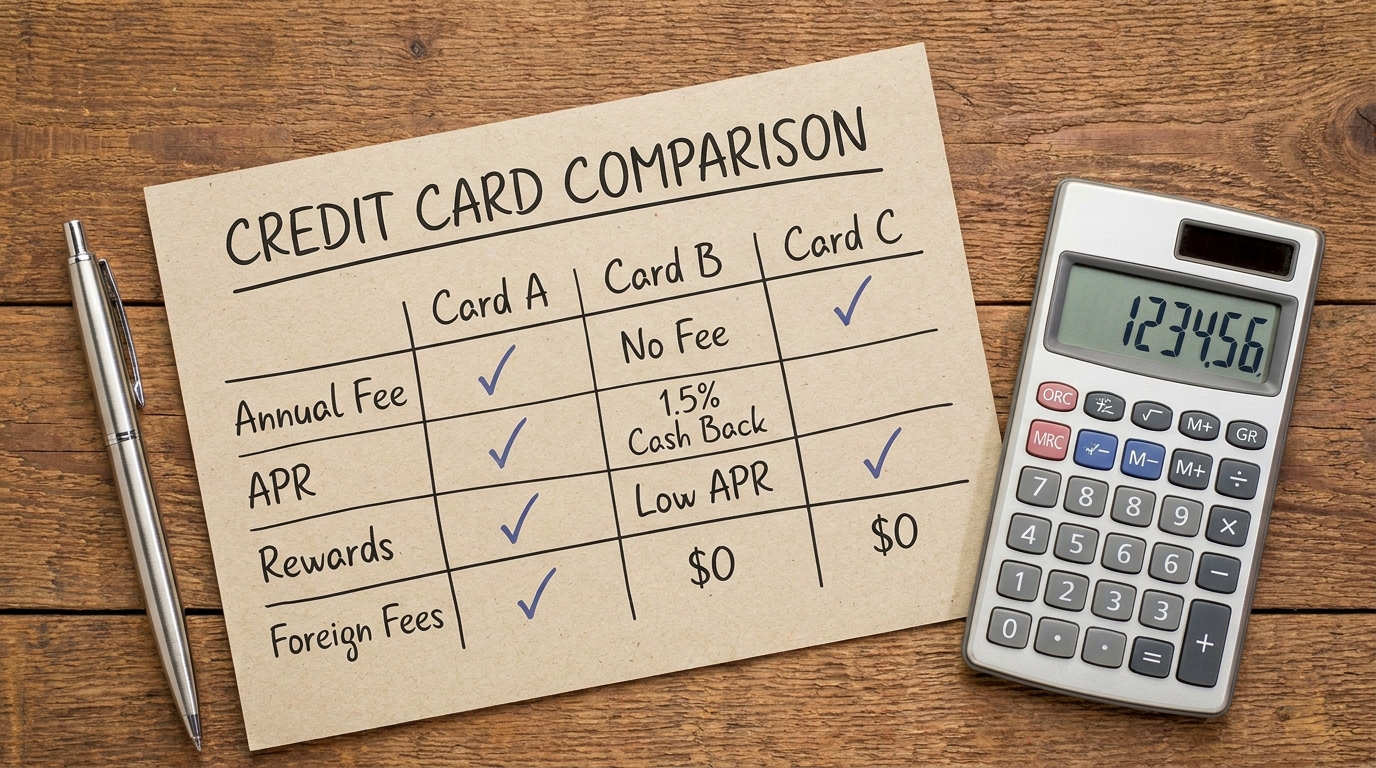
The average Canadian household carries 2.3 credit cards. Most people picked theirs because a bank rep suggested it, or a mailer arrived at the right moment. That is not a strategy. Picking a credit card the right way takes about 20 minutes and can put hundreds of dollars back in your pocket every year.
2.3
average credit cards per Canadian household
4%
top cashback rate on groceries
$120
typical premium card annual fee
20 min
to find the right card with your statements
Here is how to actually do it.
Start with where you spend, not where you want to spend
Most people pick a travel card because they like the idea of free flights. But if you fly once a year and spend $800 a month on groceries, a travel card is probably the wrong choice.
Pull up three months of statements and find your top three spending categories. For most Canadians those are groceries, gas, and dining. Some households skew heavily toward utilities and recurring subscriptions. Know yours before you start comparing cards.
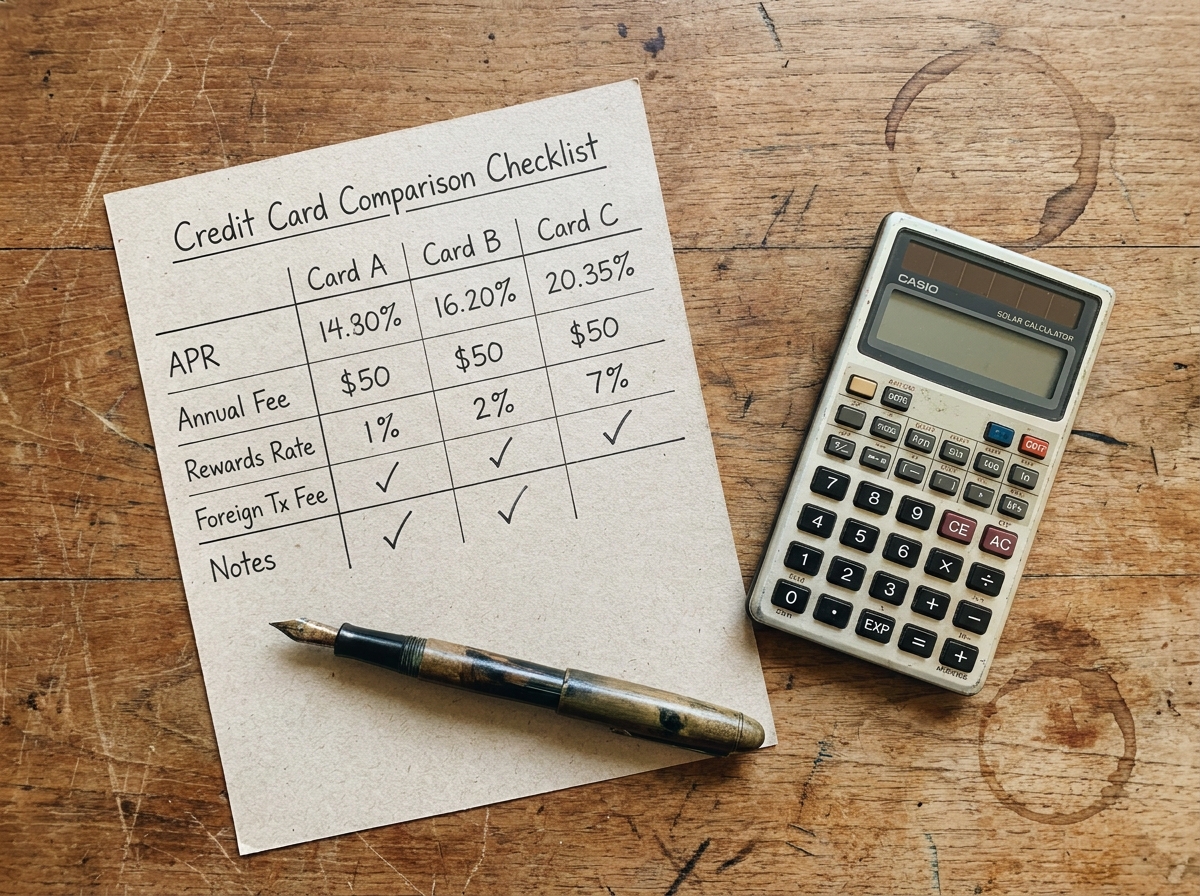
Once you know where the money actually goes, match it to the category bonuses on offer. The Scotia Momentum Visa Infinite pays 4% back on groceries and recurring bill payments. If you spend $600 a month on groceries and $200 on subscriptions, that is $384 a year in cashback before you touch anything else on the card. The math gets compelling fast.
Annual fee math: when paying $120 a year makes sense
A lot of Canadians avoid credit cards with annual fees on principle. That instinct costs them money.
The question is not whether a fee exists. The question is whether the rewards value exceeds the fee. If a card earns you $600 in cashback or travel credits per year and costs $120, you are up $480. If it earns you $80 and costs $120, cut it.
Do the math for your actual spending, not the hypothetical lifestyle they show in the ad. Most premium travel cards require $2,000 to $3,000 per month in spend to justify the fee. If your monthly total is closer to $1,500, a no-fee card or a mid-tier card often wins.
The interest rate is almost irrelevant (if you pay it off)
Canadian credit cards charge between 19.99% and 24.99% interest, which sounds alarming. But interest only matters if you carry a balance. If you pay your statement balance in full every month, the rate is irrelevant.
This is a key distinction. A card that charges 20.99% and earns 4% on groceries is a better deal for someone who pays in full than a card that charges 11.99% and earns 0.5% on everything. The person paying in full gets the rewards. The person carrying a balance gets the interest charges.
If you do carry a balance regularly, your math is different. In that case, look for a low-rate card (some credit unions offer 8.99% to 12.99%) and skip the rewards cards entirely until the balance is gone.
Annual Fee Break-Even Calculator
Enter your typical monthly spending to see whether a premium cashback card pays for itself.
Sign-up bonuses: the fastest way to get value fast
Welcome offers are where credit card companies compete hardest. A typical premium card might offer 50,000 to 80,000 points as a sign-up bonus for spending $3,000 to $5,000 in the first three months. On the Aeroplan program, 50,000 points can cover a return flight to Europe in economy if you book smart.
The catch is the minimum spend. You need to hit that threshold to get the bonus. If you would have to manufacture spend or take on debt to reach it, skip it. But if the spending aligns with what you were going to do anyway (a home repair, a quarterly insurance bill, a planned trip), timing the application to coincide with that spend is just smart planning.
Match the card type to your actual life
Three card types cover most Canadian consumers well:
- No-fee cashback: Best if you want simplicity and no annual cost. The Tangerine Money-Back card pays 2% in up to three categories of your choice. The Rogers Red Mastercard pays 1.5% on everything. No complexity, no fee, consistent returns.
- Mid-tier rewards ($0 to $120 annual fee): Best if you have clear category spend. The American Express SimplyCash Preferred pays 2% on everything for $9.99 a month. The Scotia Momentum Visa earns 1% to 2% in key categories for $39 per year.
- Premium travel ($120 to $150 annual fee): Best if you fly regularly and want insurance benefits. TD Aeroplan Visa Infinite, Scotiabank Gold American Express, and RBC Avion Visa Infinite all sit in this tier. The free checked bags and travel insurance alone often justify the fee for frequent Air Canada passengers.
Frequently asked questions
Does applying for a new credit card hurt my credit score?
Yes, briefly. A new application creates a hard inquiry that typically drops your score by 5 to 10 points. That impact fades within 12 months. If you have a good credit score to begin with, a single application will not meaningfully affect your borrowing ability.
How many credit cards should I have?
For most people, two is the right number. One primary card that earns well on your top spending categories, and one backup Visa or Mastercard for merchants that do not accept American Express. A third card can make sense if you have a clear purpose for it, like a no-fee card for a specific category your primary card does not cover well.
Can I use a Canadian credit card in the US without extra fees?
Most Canadian credit cards charge a foreign transaction fee of 2.5% on purchases made in foreign currencies. Some cards waive it. The Scotiabank Gold Amex, the Chase Marriott Bonvoy, and a handful of others have no foreign transaction fee. If you travel to the US or shop on US websites regularly, that fee adds up fast.
The best credit card is not the one with the most impressive ad. It is the one that earns the most on how you already spend. Spend 20 minutes with your last three months of statements and a comparison tool, and you will find it.
